As a homebuyer, when you begin your home search, your LW Reedy real estate agent may ask you what styles of homes you like. You may not have given this much though before, especially if you are a first-time homebuyer. Keep in mind that home style is different from home features (four bedrooms, three baths, big backyard, etc.).
Recognizing and understanding the differences between various home styles, such as Cape Cod, Colonial, Modern, Modern Farmhouse, and Tudor makes it much easier to communicate your style preferences to your real estate agent, making your home search more efficient and successful.
This newest edition of our Real Estate 101: House Styles Series explores the American Craftsman home style and the features that make this home unique from any other style. Those who appreciate the blend of strong, clean lines, beautiful craftsmanship, natural materials, and a direct tie to the outdoors will find this home style appealing.
The interior of a traditional, older craftsman home often includes plentiful woodwork, natural materials, and functional rooms with clear delineation between spaces. Keep in mind that newer American Craftsman homes borrow styles from the earlier versions and often include open layouts.
If the cozy feel, hand-crafted details, and connection to the outside world speak to you, the American Craftsman home style may be exactly what you are looking for in a home today.
CHARACTERISTICS OF AMERICAN CRAFTSMAN
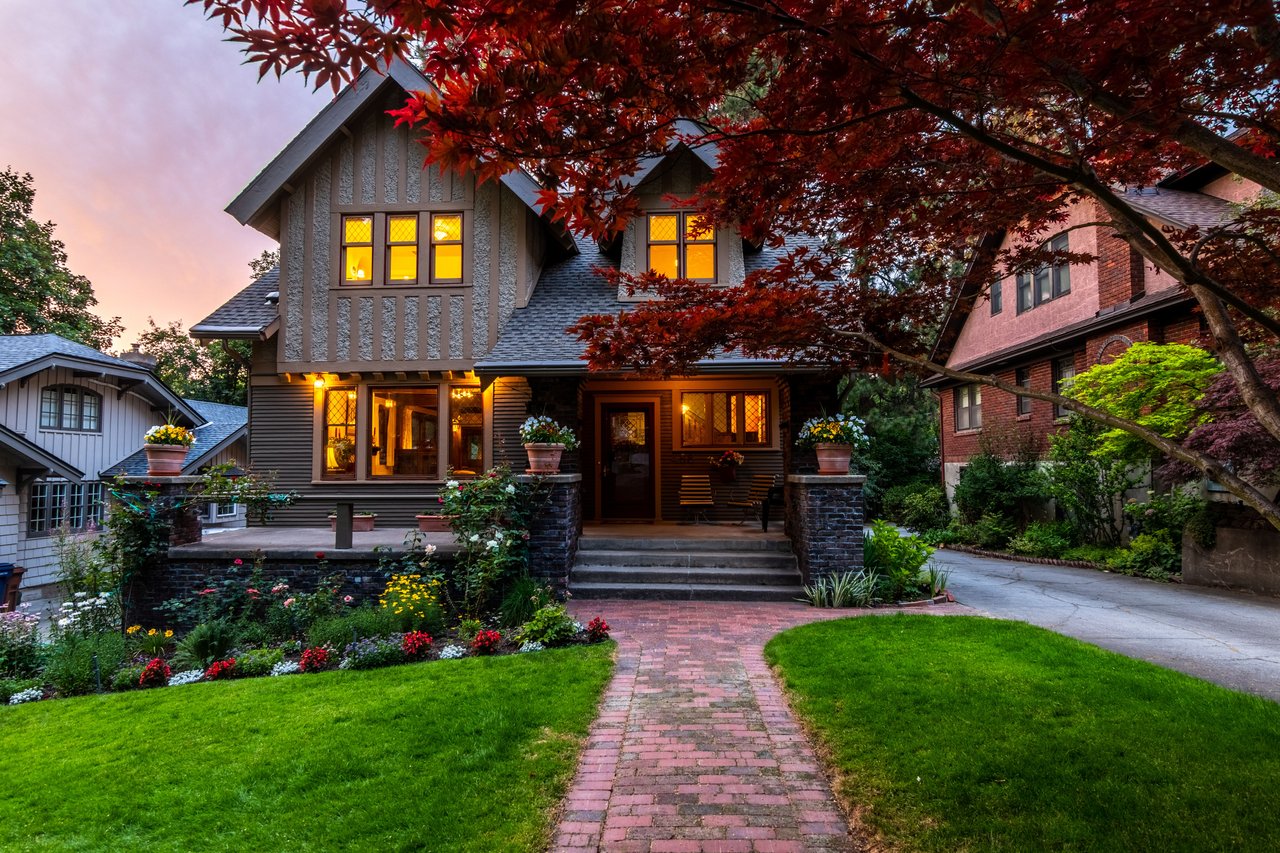
Today’s American Craftsman style homes often feature simple peaked roofs, often with a dormer on each slope. Roofs are often shingles and swoop over expansive front porches that span the width of the home. The bold, but inviting front of an American Craftsman often stand out in neighborhoods with strong pillars supporting the rooflines overhanging the cozy porch area.
The home’s exterior often is made of natural materials and bathed in earth tones, blending into nature. The front door is often under the cover of the porch and the area lends itself to adding outdoor furniture to take advantage of this bonus outdoor “room.” Wood, stone, brick, and painted elements work together on the outside of an American Craftsman.
Windows of an American Craftsman are often numerous and have multi-panes framed by noticeable wood trim. Windows under porches may let in less light, but the entire wall could be all windows. Dormer windows allow upstairs room light and views, but are often smaller. Newer American Craftsman-inspired homes will have larger and often more windows than older Craftsman homes.
The exterior of chimneys often feature natural brick accents. Foundations may also feature this same brick style for continuity and clean lines. The brickwork carries through to the emphasis on handiwork and the use of natural materials.
WHAT MAKES AN AMERICAN CRAFTSMAN UNIQUE?
The American Craftsman home style draws inspiration from the British Arts and Crafts movement that was a direct reaction to the effects of the Industrial Revolution, going as far back as the 1880s. American Craftsman style home building peaked from about 1900 to 1930 and the styles were directly related to the evolution away from Victorian design and merging into the development of the Prairie School style and Frank Lloyd Wright.
Above all, those championing the American Craftsman style were standing against the mass-produced, lower quality goods that were emerging from the era. American Craftsman homes put the focus on hand-hewn wood, detailed woodwork, and built-in elements as opposed to using machinery to create these features.
Despite the American Craftsman style’s long history, the homestyle continues to contribute to home design today including in new home construction. When you see a built-in cabinet, window seat, exposed wood beams, and gorgeous woodwork, all give a nod to American Craftsman style.
American Craftsman elements and style still work for today’s modern lifestyle.
The exterior of homes, accented with natural materials and often sporting a color palette that ties into its natural surroundings, provide appealing curb appeal, enticing a homebuyer to become the homeowner.
The cozy interior brings families together while each room is defined for its purpose, making each area useful. The thoughtful design still speaks to today’s discerning homebuyers who desire their homes to work for them through every life stage. A focal-point fireplace stands out in the American Craftsman home, often built of decorative stone or brickwork.
Landscaping around an American Craftsman home is often simple and unassuming, making upkeep straightforward and simple for today’s busy homeowners. Native plantings pair well with American Craftsman homes.
UPDATING AMERICAN CRAFTSMAN HOMES FOR TODAY
The ability to update a craftsman home is a divisive debate. Those who love the historic look and heavy wood trim cannot imagine making any changes that would contemporize the interior – or exterior – of the home. However, there is an argument to update elements for longevity and ease of maintenance.
Craftsman homes have many wood, brick, and stone elements. Depending upon the age of the home, many of these elements are built to last. Repairs to wood trim, flooring, beams, and other elements can be an issue to match both the wood type/grain and the craftsmanship.
Well-maintained American Craftsman homes are often in demand for today’s buyers looking for well-constructed homes. The heavy wood trim and built-in elements are coming back into style as homebuyers trend toward earthy colors and textures in and on homes today.
Basements exist in many of these homes and may or may not already be finished. That area may be left for you to personalize to your tastes.
LIFESTYLE
American Craftsman homes are in demand for homebuyers who wish to have a home that isn’t a full open layout, but still offers a functional layout for today’s lifestyle. Those who work from home appreciate the dedicated rooms with doors to allow for separation from household hub-bub.
The inviting front porch provides curb appeal that transcends the age. Families appreciate American Craftsman homes as there are often enough bedrooms for everyone, functional kitchens, formal entertaining spaces, and room to spread out.
Those moving from older homes or older apartments/condos appreciate the sturdy build of a craftsman. With the wood windows, trim, stairs, flooring, and more, homeowners should be prepared to maintain the beautiful elements that make a craftsman home so special.
PRICE POINTS
American Craftsman home prices depend upon the home’s square footage, location, and condition in the Chicago area. The recognizable style is often in demand, especially if the home has been updated to today’s expectations with a modern kitchen and bathrooms.
You may recognize some of the elements of American Craftsman homes in new builds. These new homes adopt many of the most desirable features of craftsman homes and allow the best features to be appreciated by today’s busy homeowners.
If an American Craftsman home sounds like the type of home you’d enjoy owning, contact one of our LW Reedy agents to discuss your homebuying needs.
–
If you have questions about Elmhurst and the surrounding communities or are getting ready for a move, contact your local LW Reedy real estate agent today.